Lisbon
Camino Portugues
Lisbon is the largest starting point on any Camino, but by European capital standards it's compact and walkable. Give yourself at least a night here before setting off — the city rewards an extra day if you can spare it.
Pick up your credencial at the Se Cathedral in Alfama or the Basilica dos Martires in Bairro Alto. Get two — the Portugues is long and stamps fill up fast. The Se is also the traditional starting point for the Camino; the first yellow arrow is on the lower right of the facade.
The city drapes itself across seven hills above the Rio Tejo. Three neighbourhoods matter most: Alfama to the east, the oldest quarter, climbing steeply beneath the Castelo de Sao Jorge; the Baixa in the centre, rebuilt on a grid after the catastrophic earthquake of 1755; and the Bairro Alto to the west, higher ground with narrow streets and late-night bars.
The Se Cathedral, Romanesque and fortress-like, dates from the 12th century and sits in the heart of Alfama. The Castelo de Sao Jorge above it offers the best panoramic views of the city and the river.
If time allows, take tram 15 to Belem. The Torre de Belem and the Mosteiro dos Jeronimos — both UNESCO World Heritage sites — are worth the trip. The monastery's Manueline stonework is among the finest in Portugal. The nearby Pasteis de Belem has been turning out pasteis de nata since 1837; the queue moves fast.
On your way out of the city toward Parque das Nacoes, you'll pass the Museu Nacional do Azulejo. Housed in the former Convento da Madre de Deus, it traces the history of Portugal's painted tile tradition from its Moorish-Spanish origins to the present. It has a stamp, and the collection is worth at least an hour.
The metro and commuter trains can eliminate the long urban walk. Take the metro to Oriente station (at Parque das Nacoes) to skip the city kilometres, or a commuter train onward to Sacavem, Alverca, or even Azambuja if you'd rather start walking in the countryside.
Before you set off be certain to pick up a pilgrim’s credencial if you have not already done so. It can be found at the Basílica dos Mártires and the Sé Cathedral. This accordion-fold booklet is your passport to the camino and will become your most cherished souvenir of the trip. It is a required document in most pilgrim-specific accommodation, earns you pilgrim prices in many museums, and will serve as proof of your journey when presented to the Pilgrim Office in Santiago if you are planning on getting your Compostela Certificate.
It is Saint Anthony of Padua that brings the Portuguese out to the streets, every June on the 13th.
Lisbon has been a harbour settlement since Phoenician times, but the Romans made it a regional capital. They incorporated the area into the province of Lusitania, and the network of roads they built — connecting Olisipo (Lisbon) with Bracara Augusta (Braga), Portus Cale (Porto), and Emerita Augusta (Merida) — survives in fragments all the way to Santiago.
The earthquake of 1 November 1755 destroyed much of the city. The Marques de Pombal oversaw the reconstruction, imposing the rational grid of the Baixa and pioneering some of Europe's first earthquake-resistant building techniques.
The patron saint of Lisbon is Sao Vicente de Saragossa, whose relics are kept in the Se Cathedral. But it's Santo Antonio de Padua — born here in 1195 — who brings Lisboetas into the streets every June 13th for the Festas de Lisboa.
The way from the Sé Cathedral is straightforward and well-marked, with the first arrow being located on the lower right of the facade. Between here and the Parque you will pass a few notable waymarks, including the Museu Nacional do Azulejo. A large portion of this city walking can be eliminated by taking the metro to the Oriente station located near the Parque; and from there it is also possible to take a commuter train to Sacavém, Santa Iria, Póvoa, Alverca, or Azambuja.
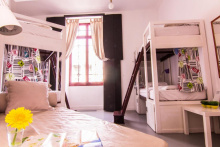
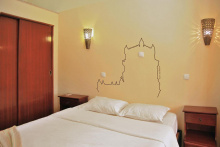
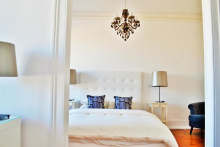
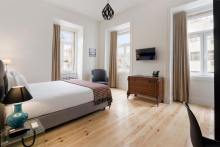
Accommodation in Lisbon.
| Oasis Hostel 15€ 58 Booking.com |
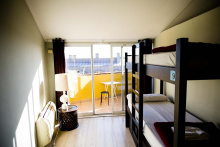
|
| This is Lisbon Hostel 17+€ 34 Booking.com |
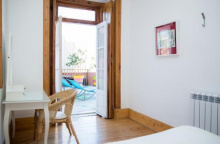
|
| Lisbon Lounge Hostel 25€ 32 |
|
| Lisbon Poets Inn 20€ 52 Booking.com |

|
| Living Lounge Hostel 25€ 58 |
|
| Pousada de Juventude Lisboa 15/17€ 100 Booking.com |
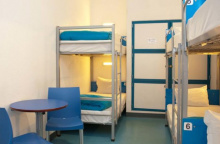
|

Comments